1086: The Domesday Book records that Meppershall (Malpertesselle) Manor was held by Gilbert, son of Solomon, and included 480 acres of arable or plough land in Bedfordshire as well as holdings in other areas.
1175: Meppershall Chapel built and dedicated to Thomas a Becket. It became an important place of pilgrimage for those too ill to make the journey to Canterbury. A papal letter of 1291 promised penitence to those who made the pilgrimage with “remission of one year and forty days penance.” (Bedfordshire Times article, undated).
1698: A school is founded by the Misses Sarah and Elizabeth Emery, daughters of Squire Richard. The school originally housed six boys and six girls.
1801: The population of the village is 309 persons in 55 houses.
1806: Lysons’ Magna Britannia reports that “The dining parlour of the old parsonage house, which stood within an old moated site, and has lately been removed, was on the boundary of the two counties. The beam had the following inscription, alluding to this circumstance: “If you wish to go into Hertfordshire, Hitch a little nearer to the fire.”
1839: A National School building is erected at a cost of 140. This took over from the Emery School. A teacher’s house was added in 1867.
1841: The population is 486 persons in 97 houses.
1870: Six people die from scarlet fever due to the unsanitary living conditions in the village.
1871: Six coprolite diggers are listed in the parish.
1875: Dr C.E. Prior of Bedford draws up a special report for the Sanitary Authority on the sanitary condition of Meppershall. This drew attention to overcrowding, cesspits near homes, the lack of a water supply and the generally bad living conditions.
1881: The population is 778 persons.
1883: A drum and fife band is formed in the village and a fete held at which there is sports, cricket and dance.
1891: The population is 650 persons.
1899: A great fire destroys Bury Farm and many cottages. The fire was dealt with by a horse drawn fire engine from Shefford. The fire had started from a steam threshing machine and made more than thirty people homeless. A relief fund was set up to help (Post Echo, 20th April 1982).
1913: The first glass house is erected in the village by William C. Cakebread for cucumbers. This starts a history of market gardening in the area.
1917: Mr Hanscombe starts a glove manufacturing factory in Hoo Road called the Overhand Glove Co.
1939: Taylor’s Reliance Coaches moves to Meppershall from Shillington. The family firm closed in 2001.
1959: Meppershall Manor severely damaged by fire (Bedfordshire Times, 20th March, 1959).
1960: Fire destroys the Village Institute. It had been built to commemorate the lives of the 17 village men who had lost their lives in the 1914-18 war.
1964: Nulectrohms, a temperature sensing equipment manufacturer moves to Meppershall. The company closed in 1977 with a loss of thirty local jobs.
1970: The Barley Mow public house closes in Hoo Road.
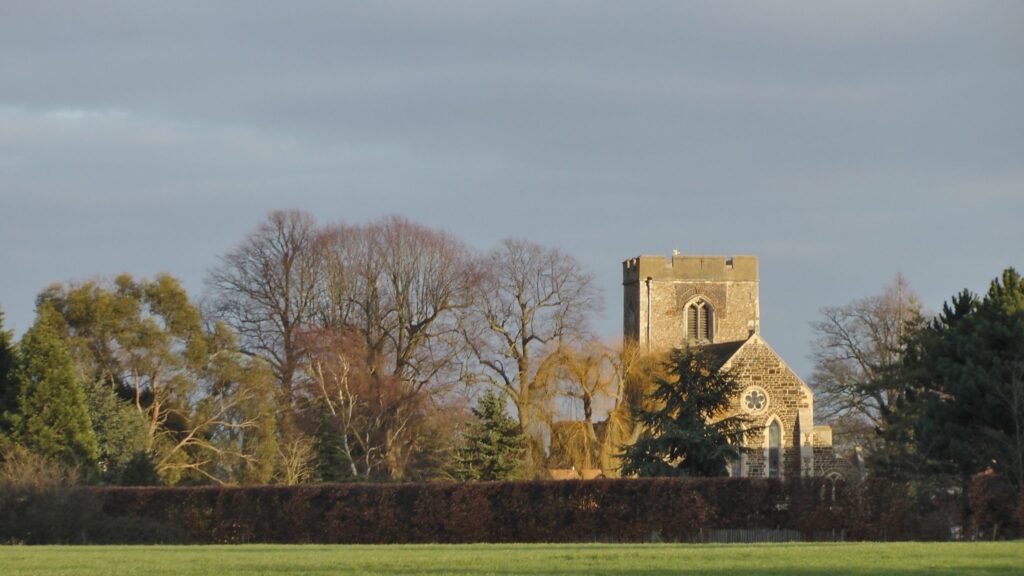
2001: An appeal is launched to raise money to refurbish St. Mary’s Church (Biggleswade Chronicle, 29th June 2001).
2007: Ministers take the decision to close Methodist Chapel after the congregation dwindled to just two the three members and repairs to the building would cost between 40,000-50,000. A final service will be held early nest year. (Biggleswade Chronicle, 2nd November)